Grand Hall · centre-right · the Pollock Studio

Pollock

forty-four years · the floor as canvas · two pieces from 1950

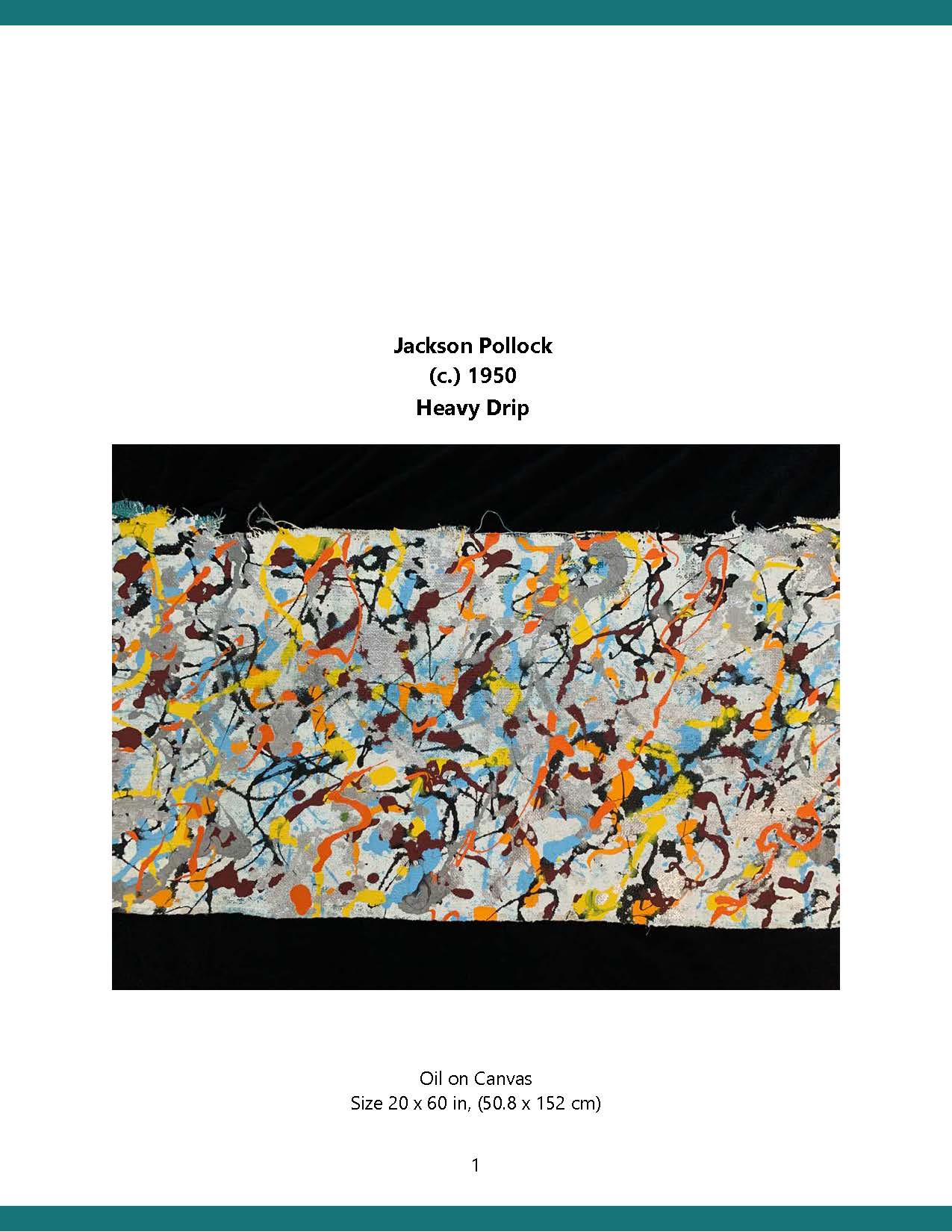
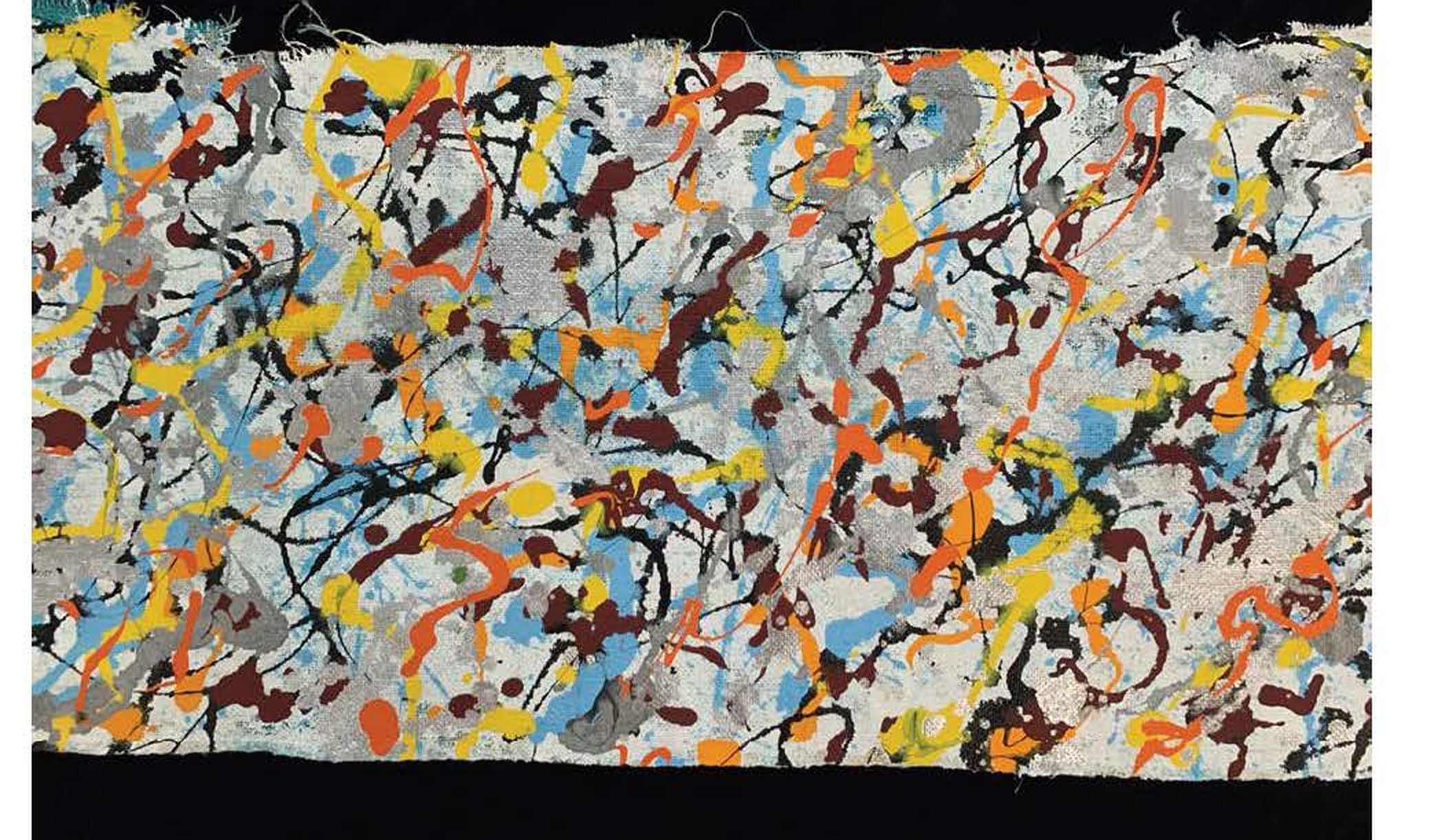
A studio room off the Grand Hall. The barn at Springs reconstructed in sound and shadow. Two heavy-drip canvases on the wall — both painted in the summer of 1950, the only year he was sober, the year Time magazine named him the greatest living painter in America.

Chapter III

Springs

1950 · the drip-paint apex · the year Cathleen wrote

Converts the barn at Springs into a studio. Lays the canvas flat on the floor — the way the Navajo sand painters had — and pours enamel directly from sticks and basting syringes, the brush never touching the surface. Lavender Mist, Autumn Rhythm, One: Number 31, Number 2 — four canvases the size of city walls, all made in the same calendar year. Hans Namuth films him at work. Cathleen McGuigan would call him, in Time that summer, the greatest living painter in America. 1950 is the only year he does not drink. The two canvases on offer here are from this summer.
Bernard · in the voice of the Sotheby's expert

"We are inside the barn at Springs, on the far eastern end of Long Island, in the summer of nineteen fifty — the year Jackson Pollock laid the canvas flat on the floor and poured enamel directly from the stick, the year Lee Krasner finally got him sober, the year Hans Namuth's camera was running in the doorway. Four canvases came out of that summer: Lavender Mist, Autumn Rhythm, One: Number thirty-one, and the heavy-drip Number Two you see at the centre of this room. That August Cathleen McGuigan wrote the Time profile that named him the greatest living painter in America. He had six years left to live."

The centrepiece · 1950 · the heavy-drip apex

Jackson Pollock — Number 2 (heavy drip)

Centrepiece · The Pollock Studio

Jackson Pollock · Number 2 (heavy drip)

1950 · TBD · Enamel on canvas

Enter the dossier →

The companion canvas · same summer · 1950